October 29, 2009
Citation: Aguilar v. Immigration & Customs Enforcement Div., 2008 U.S. Dist. LEXIS 97018 (S.D.N.Y. 2008)
e-Lesson Learned: At the outset of any litigation, the parties should discuss whether the production of metadata is appropriate and attempt to resolve the issue without court intervention. Courts generally have ordered the production of metadata when it is sought in the initial document request and the producing party has not yet produced the documents in any form. However, if metadata is not sought in the initial document request, and particularly if the producing party already has produced the documents in another form, courts tend to deny later requests for metadata.
Twitter This: Don’t Forget Your Metadata, The Burden Later May Be Too Much
This case is a civil rights action brought by more than thirty Latino plaintiffs who allege that the Immigration and Customs Enforcement Division of the United States Department of Homeland Security and certain of its employees subjected them to unlawful, unwarranted searches of their homes in violation of the Fourth Amendment. The plaintiffs in this case had been ordered to leave the country, however, they remained in the US as fugitive aliens. This opinion arose because counsel failed to discuss the form of production for electronic documents early in the case, and the Court was forced to resolve several issues concerning the discoverability of metadata.
During a Rule 26(f) discovery conference, the parties agreed that discovery would proceed and that the parties would serve their first requests for the production of documents by February 15, 2008. There was no discussion of metadata at this conference. On February 15, the Plaintiffs served their first request for the production of documents, but their request did not specify the form in which they sought to have electronically stored information (“ESI”) produced. This request did not mention metadata either.
Continue reading »
 No Comments » |


 More...
|
More...
|  Permalink
 Tagged as: Accessibility, Admissibility, Discoverability, Meet & Confer, Metadata, Production of Data
View more articles implicating: Document Custodians, Outside Counsel
October 22, 2009
e-Lesson Learned: Key word searching is not enough to find all relevant information from a source of electronic discovery. Members of the TREC research team are testing several different search models and have identified a few best practices for lawyers working with electronic discovery.
Unfortunately, the key word search is ineffective for e-discovery. A keyword search often misses many of the relevant documents. However, the keyword search is the current standard for searches.
Does anything work short of hiring an expert?
Jason Baron and Doug Oard of the 2009 TREC Legal Track research team are addressing the many questions plaguing the field of E-discovery by testing the current E-discovery technology and various search methods.
With the help of lawyers, researchers, and scientists, the TREC researchers are seeking the perfect search for mining relevant e-discovery documents.
The shocking news – the technology tested from over 20 e-discovery vendors proved no better than Boolean keyword searches. Continue reading »
1 Comment | More...
| Permalink
Tagged as: Experts, Meet & Confer, Production of Data
View more articles implicating: In-House Counsel, Information Technology Professionals, Outside Counsel
October 16, 2009
e-Lesson Learned: (Coming as soon as the Supremes rule on the issue of whether this employee had a reasonable expectation of privacy in emails between the employee and her lawyer, sent and received (during work hours) using the employer’s computer and IT systems
Twitter This: All eyes on NJ as high court decides key issues implicating privacy, employer/ee relations, attorney-client priv & eDiscov http://ellblog.com/?p=1927
Earlier we reported that a New Jersey state trial court found that a former employee waived the attorney-client privilege when she decided to use company time, equipment, and resources to communicate with her lawyer (see Stengart v. Loving Care). Recently, an appellate court reversed that ruling and framed the issue “whether workplace regulations converted an employee’s emails with her attorney” sent through the employee’s personal, password-protected, web-based email account, but via her employer’s computer “into the employer’s property.”
Plaintiff had argued that the company failed to demonstrate that it had ever adopted or distributed the policy in question, that she was unaware that the policy applied to her, and even if the policy did exist, the company had not previously enforced it. The company argued that it had disseminated the policy, and that the policy did apply to the plaintiff. The appellate court determined that issues of material fact existed as to whether the policy at issue was in place and disseminated at the time of plaintiff’s employment and as to whether the policy applied to plaintiff; and that these issues could not be resolved by the trial judge without a hearing on the matter.
Continue reading »
No Comments » | More...
| Permalink
Tagged as: Accessibility, Admissibility, Computer Forensics Protocols, Consent, Legal Hold/Preservation, Privacy, Privilege, Waiver
View more articles implicating: Document Custodians, Employees, Outside Counsel, Owners/Executives, Stengart Watch, Upper Management
October 15, 2009
Citation: Smyth v. Pillsbury Co., 914 F. Supp. 97 (E.D. Pa. 1996)
e-Lesson Learned: If an employee sends an e-mail that contains threatening remarks that could create an unsafe working environment, then employee can be fired regardless of the employee’s right to privacy.
Twitter This: Choose your words wisely when sending an e-mail on the company’s e-mail system. It could cost you your job. http://ellblog.com/?p=1712
We’ve all said something we shouldn’t have…but writing the personal comment in an e-mail and sending it through your company’s e-mail system, is not the time and place.
Factual Background
Michael Smyth, an at-will employee of The Pillsbury Company, claimed he was wrongfully discharged from his managerial position at the company. Smyth said The Pillsbury Company invaded his right of privacy by wrongfully intercepting e-mails the company assured would remain confidential.
The Pillsbury Company maintained an e-mail system to promote internal communication amongst its employees. The Company repeatedly told its employees that all e-mails would remain privileged information and could not be used against its employees as grounds to terminate their employment.
Smyth received an e-mail from his supervisor through the company’s e-mail system on his computer at home. The Pillsbury Company alleges that Smyth responded to the supervisor with emails that contained threats to “kill the backstabbing bastards” and referred to the planned Holiday party as the “Jim Jones Koolaid affair.” Continue reading »
No Comments » | More...
| Permalink
Tagged as: Accessibility, Privacy
View more articles implicating: Employees
October 14, 2009
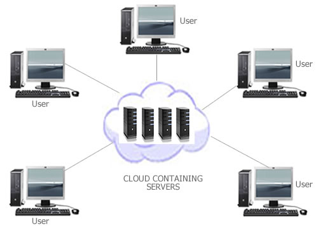
On September 22, Vivek Kundra, the federal CIO, announced the launch of Apps.Gov, a website offering governmentally approved cloud computing applications, in the hopes of phasing out the government’s current, more expensive and difficult software. Cloud computing software is a model in which software is distributed virtually, instead of being installed individually on PCs or local servers. The storefront will be run by the General Services Administration, and consists of a variety of business applications, productivity software, and much more.
Even though Kundra admits that this will be a gradual process, he appears confident that the plan will increase government efficiency and allow the government to “buy smarter” during these difficult economic times. The reduced prices and energy efficiency that this website offers, affords the federal government the same benefits of technological advances that private citizens enjoy daily.
The unveiling was attended by the executives of companies offering these cloud computing services, including: Google, Microsoft, Adobe Systems, Facebook, and Vimeo. All of the executives showed great excitement at the prospect of gaining the U.S. government as customer.
This development is consistent with the Obama administration’s dedication to updating the government’s technology systems, which in turn should greatly reduce the enormous budget of federal I.T. (which has been estimated to be $75 billion).
To learn about Cloud Computing and what it means, click here.
No Comments » | More...
| Permalink
View more articles implicating: The President