This case arises out of the nuclear reactor accident that occurred at the Three-Mile Island Power Plant on March 28, 1979. This 3rd Circuit decision was rendered more than 20 years after the incident and after a complicated procedural history that included multiple filings by thousands of plaintiffs in both state and federal court. Congressional amendment of a statute finally allowed all of the cases to be consolidated in federal court. The main issue decided on appeal was the district court’s exclusion of expert testimony, based on the gatekeeping standards of Daubert, which restricted plaintiffs’ ability to show that they were exposed to radiation sufficient to cause injury. The other issue on appeal was the award of sanctions for violations of pre-trial discovery requirements and orders. As this is an eDiscovery blog, I will be addressing the discovery and sanctions issues rather than the voluminous and complex scientific matters that arose in this nearly 200 page decision.
Continue Reading
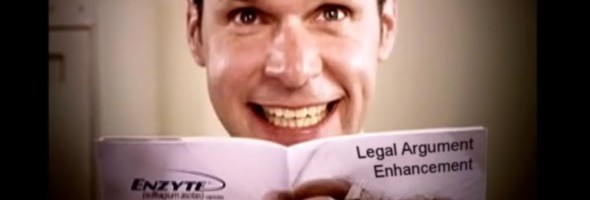
Anyone who watched television during the early to middle part of the last decade would have seen an ad for Enzyte. The product purported to make male genitalia larger and used a figure referred to as “Smilin’ Bob” as its representative. The company also said the product was scientifically proven to work and would produce a size increase of up to twenty-five percent. Much to the dismay of Enzyte's Porsche-revving customers, that was all a fiction. However, it was a very successful fiction, producing hundreds of millions of dollars for the product’s creator, Steven Warshak, his mother and Enzyte employee Harriet Warshak, and his representative company. Much of the success of the product was not due to repeat business, but a system called “auto-ship” where anyone ordering the product online was automatically enrolled in (and generally uninformed of) a program which would continue shipping (and charging for) the product. Additionally, Warshak hid or omitted any disclaimers about this practice on the corporate website and further required anyone dissatisfied with the product to sign an affidavit that the product had not worked. The rationale behind this was that people would be too embarrassed to have such a document notarized. Naturally, such practices caused consumers to become aroused with anger, and file complaints with the Better Business Bureau.
Continue ReadingSo you’re in the discovery stage of litigation and you make a request but the other side won’t produce. No problem you think, I’ll just subpoena ‘em. WRONG. In Richardson v. Sexual Assault/Spouse Abuse Research Ctr., Inc., Patrick Richardson filed a complaint against the Sexual Assault/Spouse Abuse Research Center (“Research Center”) alleging intentional infliction of emotional distress, tortuous interference with Richardson and his ex-wife Sheri Richardson’s divorce proceedings, and gender discrimination in violation of the Fourteenth Amendment and the Maryland State Constitution.
Continue ReadingBe careful when you defend a civil suit that was triggered by a government investigation! When you respond to discovery requests and produce material which was previously not within the reach of the grand jury, the government can subpoena these documents! A civil protective order will not do you any good! The defendants in In re Grand Jury Subpoenas had to find that out the hard way.
Continue ReadingNot only was Jannx scolded by the District Court on three separate issues, they are now responsible for significant legal fees, and lost a motion to protect their own data. It’s safe to say the Indiana District Court was not impressed with the Jannx legal team. Basically, this case involves a dispute over pre-trial discovery motions between the plaintiff, Jannx Medical Systems and defendants, Methodist Hospital, Crothall Healthcare, Inc., and Propoco Professional Services. The Court issued an opinion and order on Defendant’s motion to get Jannx to comply with electronic discovery and Jannx’s motion to withhold electronic data from discovery by reason of trade secrets, etc.
Continue ReadingIn In re Stern, Virgie Arthur, mother of the late Anna Nicole Smith, alleged that Howard K. Stern, Smith’s former attorney, and others in the media (particularly television and internet gossip programs) had engaged in a conspiratorial effort to defame her and harm her efforts to maintain custody and visitation rights of Smith’s daughter. Arthur challenged Stern’s assertion that he was father to Smith’s newborn daughter, thereby causing Stern to engage in a conspiracy in which his sister, Bonnie, as well as additional parties (Nelda Turner, Lyndal Harrington and Theresa Stephens) found “dirt” on Arthur and then posted it on the internet. Further, Stern and his alleged conspirators had provided gossip website TMZ with a tape and transcript of an interview in which Smith accused Arthur of “being complicit in child abuse” committed against Smith when she was a child.
Continue ReadingIn 2006, Numerex, a satellite communications company, began attempts to acquire Orbit One, which was owned by David Rosen, Scott Rosenzweig and Gary Naden. These negotiations resulted in an asset purchase agreement signed in July 2007, under whose terms Rosen, Rosenzweig, and Naden would continue on with Numerex, with Rosen becoming president of the new division. Around the same time Naden’s former company, Axxon initiated suit against Orbit One and Orbit’s attorneys ordered a litigation hold to ensure preservation of information relating to that controversy.
Continue ReadingWhen I was a kid, every year at Hanukah, my mom had a one in one out policy for toys. If I got a new Transformer, I had to donate an old toy to Goodwill. It taught me two important lessons: always think of those less fortunate and try to keep the clutter in your home to a minimum. My fiancé cannot bear to part with anything. About five years ago she lost weight and went from a size 14 to a size 8. Today, half of her closet is filled with clothes that are 6 sizes too big for her. Which one would you rather have for a client?
Continue ReadingAs the Appellate Court in Minnesota aptly noted, the rules of civil procedure exist for a reason―they provide us with an orderly system of discovery. Do not attempt to circumvent these rules. Secret email surveillance is never a good idea. This point was made very clear in Gates v. Wheeler. Richard Gates and Matthew Wheeler were co-owners of RSR, which was a limited liability company in Minnesota. Over time, the men’s relationship soured and this led to deadlock in their management of the company. Clearly, the time arrived for their professional relationship to end.
Continue ReadingAgain with the scandalous sex tapes? Seriously? With all the publicity surrounding leaked sex tapes coupled with the prevalence and ease of digital communication, one cannot honestly believe such a tape will remain a well kept secret. You’ll receive no sympathy on this blog for your escapades, and you’ll receive no sympathy in the Ohio court system, either. In Davis v. Spriggs, Spriggs was suing her former husband (Davis) for posting pictures and video on an adult website after the divorce settlement, signed a few months prior, specifically prohibited such distribution. Spriggs discovered these pictures after logging into a members-only adult website which sent her enough email spam she just had to check it out. Whilst cruising the racy adult website she also discovered pictures of her ex’s new girlfriend.
Continue Readingcollapse footer
expand footer