March 28, 2009
Citation: School-Link Technologies, Inc. v. Applied Resources, Inc., 2007 WL 677647 (D. Kan.)
e-Lesson Learned: When faced with potential litigation, a corporation has a duty to immediately place a litigation hold on all potentially relevant documents and to subsequently continue to monitor that hold.
At issue in this case was a corporation’s failure to comply with its duty to issue a litigation hold in the face of pending litigation. However, the corporation was ultimately not sanctioned for its failure to comply with its obligation because the plaintiff could not establish that the failure resulted in the spoliation of relevant evidence.
Continue reading »
 1 Comment |


 More...
|
More...
|  Permalink
 Tagged as: Legal Hold/Preservation, Sanctions, Spoliation
View more articles implicating: In-House Counsel, Owners/Executives
March 16, 2009
Citation: Easton Sports, Inc. v. Warrior Lacrosse, Inc., 2006 WL 2811261 (E.D. Mich. Sept. 28, 2006).
e-Lesson Learned: After being notified of pending litigation, employees who cancel personal email accounts in order to destroy any record of information sent through the service place their employers at risk for discovery sanctions. Employers who fail to take proper steps to prevent the spoliation of evidence and ensure preservation of relevant electronic data will likely receive such sanctions.
The Background:
Homayoun Ghassemi, Director of Hockey Marketing for Easton Sports, Inc., communicated with a competitor company, Warrior Lacrosse, Inc., about potential employment with Warrior. During the course of Ghassemi’s communications with Warrior, but before he informed Easton that he intended to leave the company and go to work for Warrior, Ghassemi accessed a number of Easton’s files.
Ghassemi used his personal Yahoo email account to send several electronic attachments of Easton files that he later downloaded onto his computer at Warrior. Furthermore, after submitting his resignation to Easton and on his last day on the Easton premises, Ghassemi created a CD that contained several of Easton’s files. A subsequent forensic inspection of Ghassemi’s Warrior computer uncovered that the CD had been “experienced” by the computer’s hard drive.
Easton began to suspect that Ghassemi had stolen trade secrets, and the company filed suit against Warrior.
Continue reading »
1 Comment | More...
| Permalink
Tagged as: Sanctions, Spoliation
View more articles implicating: Upper Management
March 14, 2009
Citation: Easton Sports, Inc. v. Warrior Lacrosse, Inc., 2006 WL 2811261 (E.D. Mich. 2006)
Employee/Employer Implicated: (Former) Director of Hockey Marketing for Easton Sports, Inc.
e-Lesson Learned: Don’t destroy evidence. If you destroy evidence when you knew or should have known that destroying it was wrong, the court will sanction you.
An employee plans on leaving his current employer for its competitor. Before he leaves, he decides to send some emails to himself and his soon-to-be employer that may have contained proprietary information and trade secrets. The former employer finds out, and sues for misappropriation of trade secrets. And what does the former employee do after finding out about the lawsuit? He destroys some of the evidence. Didn’t your mom teach you that you destroying things is bad? Guess not.
Continue reading »
4 Comments | More...
| Permalink
Tagged as: Accessibility, Discoverability, Good Faith, Legal Hold/Preservation, Sanctions, Spoliation
View more articles implicating: Marketing & Sales Professionals
March 8, 2009
Citation: In re Gary E. Krause, 367 B.R. 740 (Bankr. D. Kan. 2007)
Employee/Employer Implicated: Chapter 7 Debtor seeking to avoid paying taxes on income from hidden trusts and off-shore accounts.
e-Lesson Learned: Computer programs that offer to eliminate evidence are a terrible idea. Instead, comply with discovery requests and don’t attempt to wipe your computer with special software.
Background: A Long History with the IRS
The IRS had Gary Krause on their radar for awhile. Mr. Krause and the IRS were at odds with each other since the early 1980s. The above referenced case was brought by the IRS and later joined by the Chapter 7 Trustee when Mr. Krause filed for bankruptcy.
Through the course of discovery, Mr. Krause initially refused to turn over an electronic data. Once compelled to turnover his laptop and desktop computers, the debtor claimed that his computer crashed. In reality, Mr. Krause thought he could outsmart everyone by using “GhostSurf” software to wipe his hard drives. He was wrong.
Continue reading »
2 Comments | More...
| Permalink
Tagged as: Legal Hold/Preservation, Sanctions, Spoliation
View more articles implicating: Miscellaneous
March 7, 2009
Citation: Ball v. Versar Inc., 2005 U.S. Dist. LEXIS 24351 (S.D. Ind. Sept. 23, 2005)
Employee/Employer Implicated: Counsel, Trustees of a Superfund Remediation Trust
e-Lesson Learned: If there is the potential for litigation on the horizon, be wise, and do not delete relevant e-mails. Realize that you can face sanctions for deleting e-mails regardless of whether counsel advised you to retain documents. When in doubt, ask before you delete.
This e-discovery dispute arose out of a case involving the remediation of a Superfund site. A trust had been set up to fund the remediation efforts of the site. The litigation began with the trustees suing Versar, Inc. The trustees claimed that Versar, Inc. had breached its contract by not fully participating in the remediation efforts. In response to the suit, and at issue in this motion, Versar requested the production of the trustees’ e-mails, various other documents, and access to the trustees’ work and home computers.
The core of this case comes down to the lack of communication between the trustees and its counsel. Even though litigation was clearly ongoing, one of the trustees continued to delete his e-mails. Here, counsel waited two years before notifying the trustee that there is an obligation to preserve evidence once it is clear that there might be a suit.
Continue reading »
2 Comments | More...
| Permalink
Tagged as: Good Faith, Legal Hold/Preservation, Production of Data, Sanctions, Spoliation
View more articles implicating: Miscellaneous, Outside Counsel
March 3, 2009
Citation: Mosaid Technologies Inc. v. Samsung Electronics Co., Ltd. 348 F.Supp.2d 332 (D.N.J., 2004)
Employee/Employer Implicated: Owner, In-house and Outside Counsel
e-Lesson Learned: A reasonable litigant is obligated to preserve potentially relevant digital information. Parties who fail to comply with that obligation do so at the risk of facing spoliation sanctions. Thus, when in doubt, be a reasonable litigant!
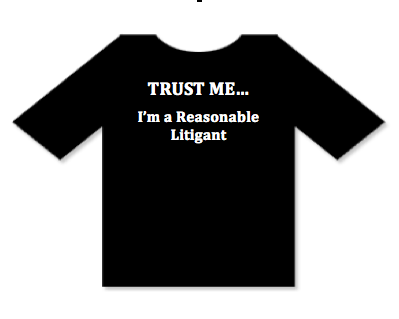
An unreasonable litigant risks spoliation sanctions
After the commencement of this patent litigation in September 2001, Samsung did not place a litigation hold on its document retention policy concerning email. As a result, Samsung’s automatic computer e-mail policy allowed e-mails to be deleted, or at least to become inaccessible. Consequently, “Samsung failed to produce a single technical e-mail in this highly technical patent litigation because none had been preserved. Thus, because of “Samsung’s complete and utter failure to produce e-mails responsive to Mosaid’s document requests” Mosaid sought sanctions before the magistrate judge. After the magistrate judge imposed the spoliation inference sanction, Samsung appealed arguing that it was an extreme sanction. The court here disagreed.
Continue reading »
1 Comment | More...
| Permalink
Tagged as: Discoverability, Legal Hold/Preservation, Production of Data, Sanctions, Spoliation
View more articles implicating: In-House Counsel, Outside Counsel, Owners/Executives
February 28, 2009
Citation: Kucala Enterprises, Ltd. v. Auto Wax Co., Inc., 2003 WL 21230605 (N.D.Ill.)
e-Lesson Learned: Do not use hard drive-scrubbing software to destroy computer documents in the middle of a lawsuit, and listen to your lawyer when he tells you not to do so.
This case involves evidence spoliation where one party made an amazing gaffe during the information discovery part of litigation, often called “discovery.” Kucala Enterprises and its owner, John Kucala (collectively “Kucala”), filed a lawsuit against Auto Wax Company (“Auto Wax”) in 2001 to invalidate a patent owned by Auto Wax. Auto Wax countersued for patent infringement. After entry of a protective order, Auto Wax, through a court order, sought to inspect Kucala’s computer files for information relating to the manufacture of Kucala’s products. After delaying this inspection for over two months, Kucala allowed Auto Wax to inspect Kucala’s desktop computer on February 28, 2003.
However, on the eve of inspection, Kucala installed a computer program called “Evidence Eliminator” to Kucala’s desktop computer.
Continue reading »
4 Comments | More...
| Permalink
Tagged as: Sanctions, Spoliation
View more articles implicating: Owners/Executives
January 27, 2009
Citation: Treppel v. Biovail Corp., No. 03 Civ. 3002 (PKL)(JCF), 2008 WL 866594 (S.D.N.Y. Apr. 2, 2008)
e-Lesson Learned: A corporation has an obligation to preserve any information that is potentially relevant to a litigation as soon as that litigation becomes known or can reasonably be anticipated. Once the threat of a pending litigation becomes real, a corporation must issue a clear litigation hold to all employees and then taken the necessary steps to ensure that everyone actually complies with that hold. Failure to comply with these obligations can result in sanctions ranging from having to foot the bill for additional discovery to an adverse inference instruction to a jury.
Shortly after being made aware of a lawsuit against his company, Biovail’s General Counsel orally instructed two company executives to preserve any relevant information to the lawsuit. However, the General Counsel never issued any written instructions regarding this litigation hold, nor did he conduct any follow up to ensure actual compliance. While Biovail did in fact preserve and backup much of the necessary information, it failed to take the steps necessary to preserve several key items of ESI, including a high level executive’s e-mails. As a result, the plaintiff asked the court to compel Biovail to produce additional ESI and to have Biovail sanctioned for failing to preserve evidence relevant to the case.
Continue reading »
2 Comments | More...
| Permalink
Tagged as: Good Faith, Legal Hold/Preservation, Sanctions, Spoliation
View more articles implicating: In-House Counsel
January 22, 2009
Citation: Kevin Keithley v. The Home Store.com, Inc., 2008 U.S. Dist. LEXIS 92822 (N.D. Cal. Nov. 6, 2008)
e-Lesson Learned: Forcing the court and other litigants to wait an excessive amount of time for available information, without a reasonable explanation, can lead to a finding of gross negligence, recklessness, and possibly bad faith.
In August of 2001, Keithley notified an executive officer of Homestore.com that suit would be filed for patent infringement. From that moment forward, Homestore had a duty to preserve any materials that might be relevant to the upcoming litigation. At a minimum, preservation of the related documents would have required recurrent communication of the duty to preserve to all employees with access to the related information. To avoid monetary sanctions and to maintain credibility during litigation, relevant information should also be kept in an easily accessible and safe location.
Continue reading »
No Comments » | More...
| Permalink
Tagged as: Good Faith, Sanctions, Spoliation
View more articles implicating: Owners/Executives